
Live, three-hour CE training
Missed and Mistaken
Assessing and Treating OCD in Neurodivergent Clients
Presented by Katie Jo Glaves, MA, LMFT, CMHS
Obsessions and compulsions can look a great deal like sensory seeking, intense interests, and difficulty with change. Three hours on telling them apart, adapting the measures you already use, and building exposure plans that fit the client's neurotype.
save my seatFriday, November 6, 2026
9:00 AM to 12:00 PM Pacific
Live on Zoom
Breaks as you need them
CE credit
3.0 NBCC hours
2.0 hours meet the WA health equity requirement
Price
From $75
Pay-what-you-are-able seats available
Why This Training
A client checks the lock eleven times. The reason matters more than the count.
Checking, rewriting, lining things up, needing the order held. Any of these can be OCD, and any of these can be how a neurodivergent client gets through the day.
OCD co-occurs with neurodivergence often enough that most caseloads carry both, and the overlap bends the work in two directions at once. Traits that come with autism and ADHD get written up as symptoms, and real OCD hides inside traits the team has already explained away.
Katie Jo Glaves works that discrimination directly. You will look at the standard measures you already use and the modifications that make them return something useful, and you will leave able to choose between in vivo exposure, imaginal exposure, and a documented rationale for not using exposure at all.
Two of the three hours are built to meet Washington's health equity continuing education requirement under RCW 43.70.613 and WAC 246-12-820 and 246-12-830, which includes looking at how your own neurotype and social location shape what you notice in the room.
save my seat
Your Presenter
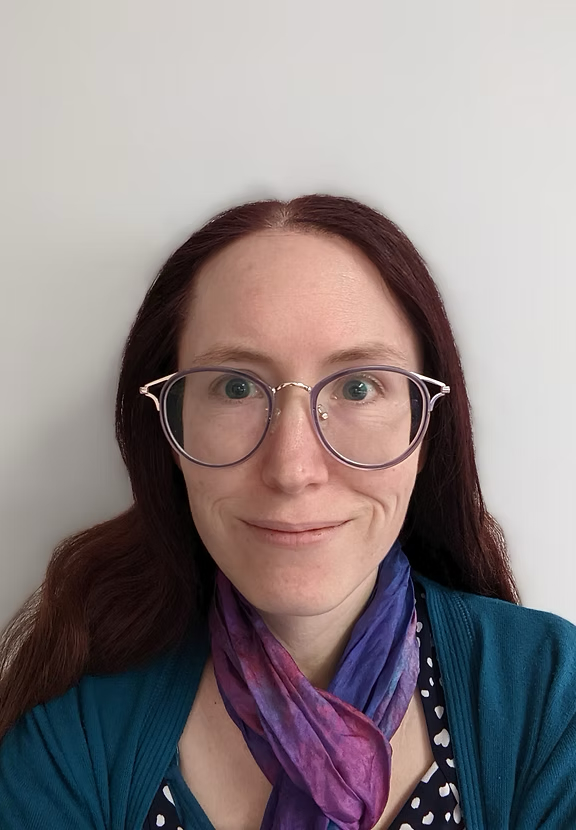
Katie Jo (KJ) Glaves, MA, LMFT, CMHS
A licensed marriage and family therapist in Washington State who has specialized in work with neurodivergent children, teens, and families for more than ten years. Katie Jo holds an MA in Psychology with a concentration in Couple and Family Therapy and Art Therapy from Antioch University Seattle, and practices at Anarres Psychotherapy.
For OCD specifically, Katie Jo completed the International OCD Foundation's Pediatric Behavior Therapy Training Institute (BTTI), the IOCDF's intensive clinician training in treating pediatric OCD. Katie Jo has published two papers in Frontiers in Psychiatry, one on autistic client autonomy and one on gender diversity in autistic clients.
Katie Jo is associate faculty at City University of Seattle, a Senior Lecturer at Antioch University Seattle, and part of the University of Washington's INCLUDE/MHI on intellectual and developmental disabilities. Katie Jo has presented locally, nationally, and internationally on neurodiversity, is currently designing AAMFT's certification course on neurodiversity, and is multiply neurodivergent, bringing both clinical and lived experience to this work.
“KJ was a very thorough and knowledgeable presenter!” — Geo Sagan, Agency Affiliated Counselor, on Katie Jo's July 2026 Lovewell training
Lovewell Initiatives builds leadership and clinical training rooted in systemic theory, critical reflexivity, and equity, for mental health professionals and the institutions they serve.
What We Will Cover
The Discrimination Itself
- Sensory seeking, focused or intense interests, and difficulty with change, held next to obsessions and compulsions
- At least three ways the two presentations look alike, and what to ask to separate them
- How forgetfulness in ADHD can build an obsession and then keep feeding it
The Measures, Adapted
- At least two standard OCD assessment measures examined closely
- Two to three modifications each one needs to account for a client's neurotype
- What a measure actually returns when its wording assumes a neurotypical reader
Exposure, Decided by Neurotype
- How a client's neurotype changes what an exposure actually asks of them
- In vivo exposure, imaginal exposure, and the case for not using exposure
- Writing the plan so the choice is documented rather than assumed
The Clinician in the Room
- How your own neurotype shapes what reads to you as a symptom
- Social location, and the assessment decisions it quietly steers
- Neurodiversity-affirming treatment as a practice, not a stance
What You Will Leave Able to Do
By the end of this training, participants will be able to:
- Distinguish obsessions and compulsions from common neurodivergent traits, including sensory seeking, focused or intense interests, and difficulty with change, and identify at least three ways the two presentations can look alike.
- Analyze at least two standard OCD assessment measures and identify two to three modifications that account for a client's neurotype.
- Evaluate how a client's neurotype affects exposure therapy, and design an exposure plan that specifies in vivo exposure, imaginal exposure, or a rationale for not using exposure.
One objective per continuing education hour. These are the objectives you will be asked about on the evaluation, and they appear on your certificate.
Who It's For, and How It Runs
Who This Is For
Mental health professionals who see neurodivergent clients and want the OCD question answered with more than a hunch. Counselors, marriage and family therapists, social workers, psychologists, and the school and agency clinicians who get asked to weigh in on whether a behavior is a symptom.
The content assumes working familiarity with OCD as a diagnosis and with exposure and response prevention as a treatment. No prior training in neurodiversity-affirming practice is needed.
Associates and students are welcome. The training carries nationally recognized continuing education through our NBCC approval, and it is each attendee's responsibility to confirm their own licensing board accepts NBCC hours.
If you were in When Neurodiversity Is the Problem in July, this picks up the diagnostic thread. It also stands on its own if you were not.
Continuing Education
NBCC Continuing Education
Lovewell Initiatives, LLC has been approved by NBCC as an Approved Continuing Education Provider, ACEP No. 7776. Programs that do not qualify for NBCC credit are clearly identified. Lovewell Initiatives, LLC is solely responsible for all aspects of the programs.
This training is eligible for 3.0 NBCC continuing education hours. The session runs 9:00 AM to 12:00 PM Pacific, which is 180 minutes of instruction. Participants are encouraged to take breaks as they need them across the morning. Participants must attend the full session and complete the evaluation to receive a certificate of completion.
Washington Health Equity
2.0 of the 3.0 hours are built to meet Washington's health equity continuing education requirement under RCW 43.70.613 and WAC 246-12-820 and WAC 246-12-830.
That includes both halves the rule asks for. One is the bias that operates inside standard assessment, where a measure written for a neurotypical reader returns a distorted answer. The other is self-reflection on how a clinician's own neurotype and social position shape what they notice, what they call a symptom, and what they let pass.
A minute-by-minute agenda documenting the time in each category is available on request. It is each attendee's responsibility to confirm their licensing board accepts the hours.
Certificate and Attendance
- Participants must attend the full session to receive CE credit. Partial credit is not available.
- Attendance is verified before credit is awarded.
- Certificates are issued after you attend, complete attendance verification, and submit the post-training evaluation.
- Full policies, including refunds, grievances, and certificate delivery, are published on our CE Information and Policies page.
Accessibility
Lovewell Initiatives is committed to accessible and inclusive learning environments. Reasonable accommodations are available on request. Email [email protected] at least 10 days before November 6 so we have time to set things up properly.
Commercial Support and Disclosures
This program received no commercial support. The presenter has no relevant financial relationships or conflicts of interest to disclose.

Registration and Pricing
Pay What You Are Able
Every Lovewell training holds equity seats at a rate you set yourself. Same content, same materials, same CE hours, and no one else knows which seat you hold.
No documentation and no explanation needed. Pay what is workable for you right now, and if you are able to pay more, that keeps seats open for the next person.
Request the equity checkout link by email at [email protected].
Registration closes Thursday, November 5, 2026 at 5:00 PM Pacific.
Frequently Asked Questions
Is my client's checking OCD or ADHD?
How do I tell a special interest from an obsession?
Can you use exposure and response prevention with a client who has autism?
Which OCD assessment measures does this cover?
Does this count toward Washington's health equity CE requirement?
Do I need prior OCD training to attend?
Is the training recorded?
What accessibility accommodations are available?
What are the refund, grievance, and certificate policies?
What if the cost is a barrier?
November 6, 2026 · Live on Zoom
The difference between a trait and a symptom is a treatment decision
Three hours with a clinician who works this line every week, and a way to make the call and write down why you made it. We would love to have you in the room.
save my seatContinuing education compliance
Lovewell Initiatives is an NBCC Approved Continuing Education Provider™ (ACEP No. 7776). Lovewell Initiatives, LLC has been approved by NBCC as an Approved Continuing Education Provider, ACEP No. 7776. Programs that do not qualify for NBCC credit are clearly identified. Lovewell Initiatives, LLC is solely responsible for all aspects of the programs. It is the responsibility of the attendee to determine whether their licensing board accepts NBCC continuing education hours.
This program complies with the Americans with Disabilities Act. Lovewell Initiatives is committed to creating accessible and inclusive learning environments, and reasonable accommodations are available upon request. Please contact [email protected] at least 10 days before the event to discuss accessibility needs.
Lovewell Initiatives, LLC · PO Box 6841, Tacoma, WA 98417 · (253) 470-8246 · [email protected] · www.livelovewell.co
Refund and cancellation policy, participant grievance policy, and non-discrimination statement: CE Information and Policies
LIVE LOVE WELL.