
Self-paced on-demand CE · Now open for pre-order
When Neurodiversity Is the "Problem"
Stop treating neurodifference as the presenting problem in family therapy
Presented by KJ (Katie Jo) Glaves, MA, LMFT, CMHS, who is designing AAMFT’s certification course on neurodiversity
Nine self-paced modules on competing access needs, Collaborative & Proactive Solutions, and working with a family’s culture instead of around it.
pre-order for $75Release
November 2026
Pre-order now, access on day one
Format
Self-paced, captioned
Nine modules, a quiz after each
CE credit
Planned for 3 NBCC hours
NBCC ACEP No. 7776 · final hours confirmed before release
Price
Pre-order $75 $90
Save $15 before release · equity seats by request
Why This Course
The quotation marks are the whole point.
Most clinicians who work with couples and families will work with clients who are neurodivergent, and traditional systemic approaches often position neurodifference as the problem to be solved.
The behavior gets pathologized, accommodations get framed as special favors, and the family member who is neurodivergent absorbs the message that the way their brain works is what is wrong with the family.
KJ (Katie Jo) Glaves walks you through how structural, behavioral, and psychodynamic models can pathologize family members who are neurodivergent, and offers other ways to work ethically with neurodiverse families. You will learn Collaborative & Proactive Solutions as an alternative to behavioral compliance approaches, work through the skills gaps model and a full family case, and look at how your own social position and a family’s culture shape what happens in the room.
The course pairs the recording of KJ’s July 17, 2026 live training with new segments KJ is recording for on-demand learners. It releases in November 2026, and pre-order buyers get access on the first day.
pre-order for $75
Your Presenter
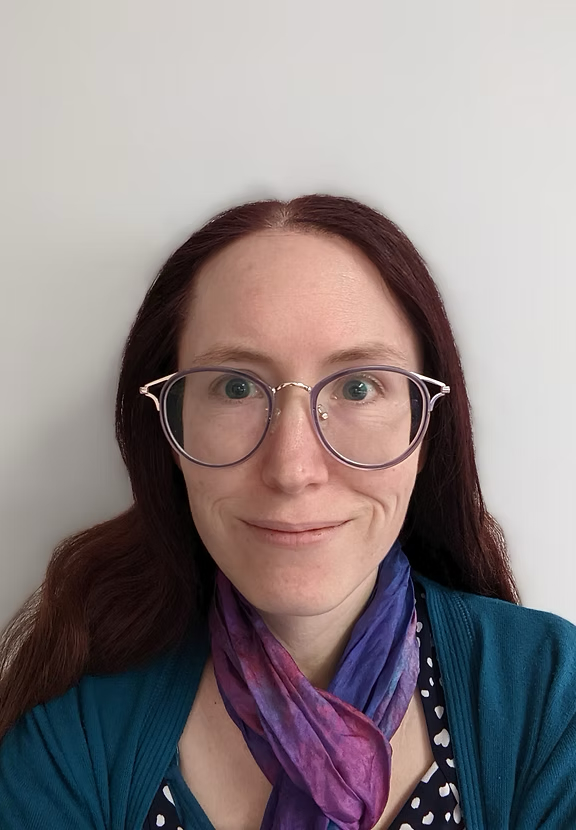
KJ (Katie Jo) Glaves, MA, LMFT, CMHS (she/they)
A licensed marriage and family therapist in Washington State who has specialized in work with neurodivergent children, teens, and families for more than ten years. KJ holds an MA in Psychology with a concentration in Couple and Family Therapy and Art Therapy from Antioch University Seattle, and practices at Anarres Psychotherapy.
KJ is associate faculty at City University of Seattle, a Senior Lecturer at Antioch University Seattle, and part of the University of Washington’s INCLUDE/MHI on intellectual and developmental disabilities. KJ has presented locally, nationally, and internationally on neurodiversity and is currently designing AAMFT’s certification course on neurodiversity.
KJ is multiply neurodivergent and brings both clinical and lived experience to this work.
“KJ has a wealth of knowledge! Excellent presentation in covering defining, treating, and working with the population. Very informative. Excellent use of case studies as well!”
Janice Hoshino, LMFT, WA, on the July 2026 live training
Lovewell Initiatives builds leadership and clinical training rooted in systemic theory, critical reflexivity, and equity, for mental health professionals and the institutions they serve.
What You Will Explore
Where Classic Systemic Models Go Sideways
- How structural, behavioral, and psychodynamic frameworks locate the “problem” in the person
- What that costs family members who are neurodivergent, and the family as a whole
- Telling dysfunction apart from relational mismatch
Competing Access Needs
- What it means when more than one family member is neurodivergent
- Recognizing the dynamic in a clinical case
- Working with competing access needs in real time
Collaborative & Proactive Solutions
- The basket method for sorting a family’s presenting concerns
- Eight skills gaps, and how to tell a skills gap from an environmental mismatch
- A full family case worked from start to finish
Ethics, Positionality & Culture
- An ethical rationale for centering client autonomy
- How your social position and assumptions about ability shape assessment and goals
- Talking with parents about a diagnosis, and adapting your work to a family’s culture
Inside the Course
Nine counted modules, each closing with a short quiz, plus a start-here module, a completion module, and three optional bonus clips from the live Q&A.
- 1When the Model Is the Problem
- 2Competing Access Needs
- 3Ethics and Autonomy
- 4Collaborative & Proactive Solutions
- 5The Skills Gaps Model
- 6A Full Family Case
- 7Working With Parents
- 8Positionality and Ableist Assumptions
- 9Culturally Responsive Practice
- +Bonus clips: OCD, acquired neurodivergence, and tabletop role-playing games in therapy (no CE credit)
What You Will Leave Able to Do
In plain terms, you will be able to spot when a model is treating neurodivergence as the problem, sort a family’s concerns with Collaborative & Proactive Solutions, and adapt your work to a family’s culture and to your own position in the room.
The full objectives, which the module quizzes and the course evaluation are built around. Upon completion of this course, participants will be able to:
- Identify at least three ways structural, behavioral, and psychodynamic family therapy models pathologize family members who are neurodivergent.
- Determine whether competing access needs are present in a described family system.
- Differentiate a neurodiversity-affirming ethical rationale from a compliance-based rationale for a stated treatment goal.
- Apply the Collaborative & Proactive Solutions basket method to prioritize presenting concerns in a family case.
- Identify which of the eight skills gaps is foundational to a described client’s presenting difficulty.
- Distinguish skills gaps from environmental mismatch in a multi-member family case.
- Select an approach for discussing a child’s neurodivergence with a parent who is resistant to the diagnosis.
- Identify at least two ways a clinician’s own social position and assumptions about ability can shape assessment and treatment goals with a neurodiverse family.
- Describe one culturally responsive adaptation to systemic intervention for a family whose cultural context shapes how neurodivergence is understood.
Who It’s For, and How It Works
Who This Is For
- Family therapists and mental health therapists across disciplines, including LMFTs, LMHCs, LICSWs, psychologists, and associate-level clinicians
- Clinicians working with families that include members who are neurodivergent, whether or not that is the referral concern
- Supervisors and clinical leads shaping how their teams assess, refer, and document
- Anyone who suspects their systemic training is pulling against the clients on their caseload
Level: Introductory. No prior coursework in neurodiversity-affirming practice is needed.
The course carries NBCC continuing education. It is each learner’s responsibility to confirm their own licensing board accepts NBCC hours.
Continuing Education
NBCC Continuing Education
Lovewell Initiatives, LLC has been approved by NBCC as an Approved Continuing Education Provider, ACEP No. 7776. Programs that do not qualify for NBCC credit are clearly identified. Lovewell Initiatives, LLC is solely responsible for all aspects of the programs.
This course is planned for 3 NBCC continuing education hours. The final number of hours is set from the measured runtime of the finished course and confirmed before release. It is each learner’s responsibility to confirm their licensing board accepts NBCC hours.
Questions about credit: Lovewell Initiatives, LLC, PO Box 6841, Tacoma, WA 98417, (253) 470-8246, [email protected]
Certificate and Completion
- Watch every lesson in Modules 1 through 9.
- Pass each module quiz by answering every question correctly. You can retake a quiz as many times as you need.
- Submit the course evaluation. Your certificate is released once every lesson is marked complete, and it shows the date you finished.
- Partial credit is not available.
- Full policies, including refunds, grievances, and certificate delivery, are published on our CE Information and Policies page.
Accessibility
Every video is captioned, and you can pause, rewind, and come back as often as you like. If you need a transcript, materials in another format, or any other accommodation, email [email protected]. You never need to disclose a diagnosis or provide documentation to ask for support.
Commercial Support and Disclosures
This program received no commercial support. KJ Glaves receives a royalty on sales of this course and serves on the WAMFT board. No other financial conflicts of interest are disclosed.

Pre-order and Pricing
Pay What You Are Able
Every Lovewell training holds equity seats at a rate you set yourself. Same videos, same quizzes, same CE hours, and no one else knows which seat you hold.
No documentation and no explanation needed. Pay what is workable for you right now, and if you are able to pay more, that keeps seats open for the next person.
Request the equity pre-order link by email at [email protected]. Equity seats are non-refundable.
Frequently Asked Questions
Is this the same as the July 17 live training?
When does the course open, and how does it work?
How many CE hours will I earn?
Do I need prior training in neurodiversity-affirming practice?
Does this count toward Washington’s health equity CE requirement?
Can I get a refund on a pre-order?
What accessibility accommodations are available?
What are the refund, grievance, and certificate policies?
Does the presenter have any conflicts of interest?
What if the cost is a barrier?
Releasing November 2026 · Self-paced
Work with the family in front of you, as it is
Nine captioned modules you can take between clients, with a clinician who has spent more than ten years in this work. Pre-order at $75 and you will have access on the first day.
pre-order for $75Continuing education compliance
Lovewell Initiatives is an NBCC Approved Continuing Education Provider™ (ACEP No. 7776). Lovewell Initiatives, LLC has been approved by NBCC as an Approved Continuing Education Provider, ACEP No. 7776. Programs that do not qualify for NBCC credit are clearly identified. Lovewell Initiatives, LLC is solely responsible for all aspects of the programs. It is the responsibility of the attendee to determine whether their licensing board accepts NBCC continuing education hours.
This program complies with the Americans with Disabilities Act. Lovewell Initiatives is committed to creating accessible and inclusive learning environments, and reasonable accommodations are available upon request. Please contact [email protected] to discuss accessibility needs.
Lovewell Initiatives, LLC · PO Box 6841, Tacoma, WA 98417 · (253) 470-8246 · [email protected] · www.livelovewell.co
Refund and cancellation policy, participant grievance policy, and non-discrimination statement: CE Information and Policies
Terms and Conditions · Privacy Policy · Disclaimer · CE Information and Policies
LIVE LOVE WELL.