
Live, three-hour CE training
Dollars & Differentiation
A Developmental Approach to Financial Conflict in Relationship Therapy
Presented by Fiona O’Farrell, PhD, LMFT, CST-S
Money shows up in couples therapy all the time. One partner spends and the other saves, one manages every account and the other barely knows where the money goes. It is tempting to treat these as financial problems, but couples rarely come to therapy because they haven’t found the right spreadsheet. This training helps you work with the relational process underneath the fight.
save my seatDate
Friday, February 26, 2027
9:00 AM to 12:00 PM Pacific
Format
Live on Zoom
Breaks as you need them
CE credit
3 NBCC CE hours
Attend live and complete the evaluation
Price
From $90
Early bird through January 29
Why This Training
How couples navigate money is shaped by much more than what is in their bank account. Family-of-origin experiences, gender, culture, financial anxiety, labor, access, and power all influence what money means and how partners respond when they disagree.
Clinicians don’t need to become financial advisors to help couples talk about money. We do need ways of understanding what happens relationally when money enters the room.
A disagreement about spending may reflect real differences in financial priorities. It may also expose difficulty tolerating difference. Financial anxiety can be tied to current economic realities while carrying family-of-origin experiences of scarcity, instability, class mobility, or responsibility. The partner who manages the household finances may hold considerable decision-making power, or may be exhausted by an invisible job neither partner has fully recognized.
This workshop draws on the Developmental Model™ of Couples Therapy, developed by Ellyn Bader, PhD, and Peter Pearson, PhD, to examine these dynamics through the lens of differentiation. Rather than deciding which partner has the right relationship with money, we ask what each partner is able to do when confronted with financial difference, and what the way a couple fights about money tells us about their relational development.
save my seat
Your Facilitator
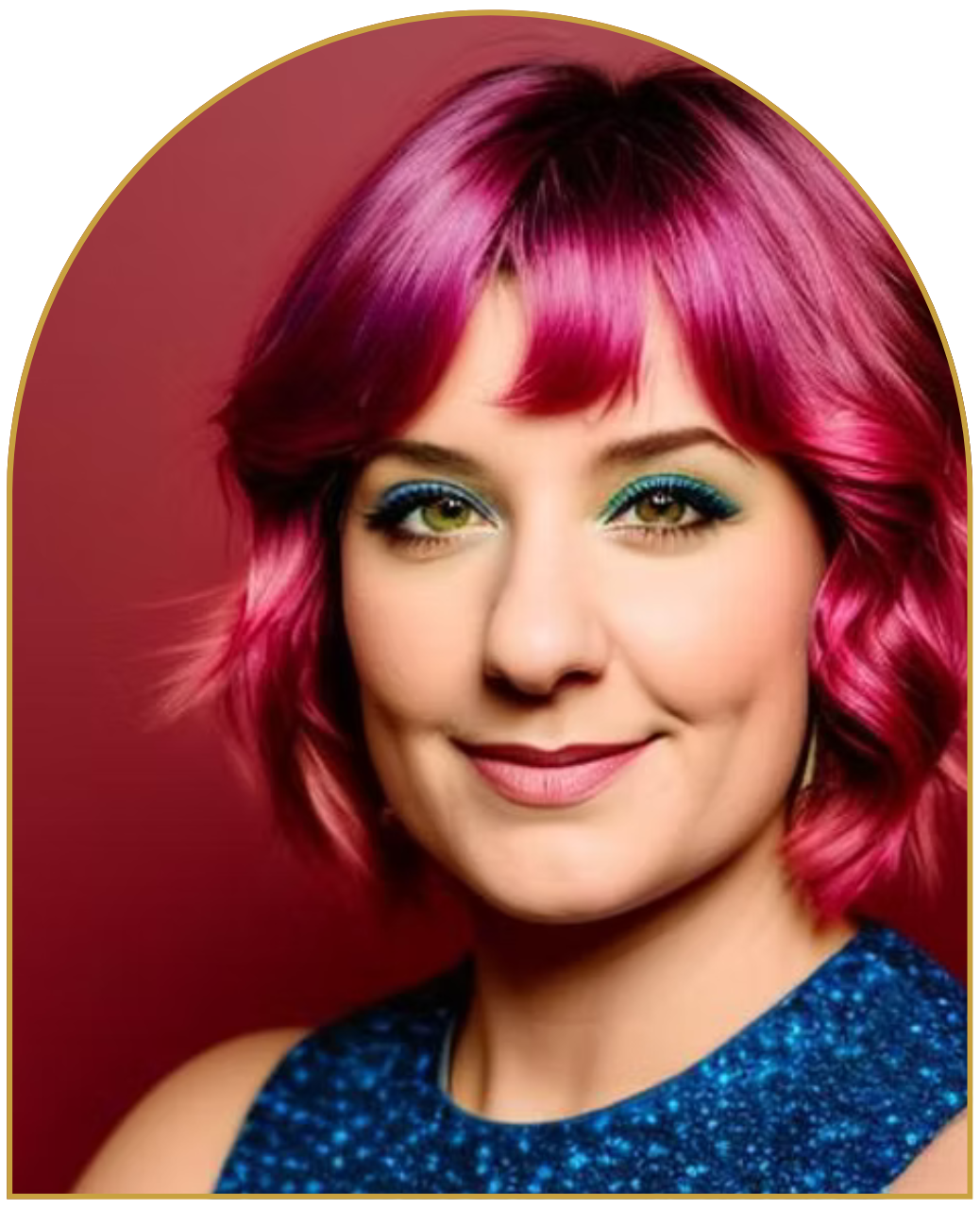
Fiona O’Farrell, PhD, LMFT, CST-S
Fiona (they/she) is a systemic therapist, clinical sexologist, supervisor, and educator with more than fifteen years of experience in systemic sex therapy and anti-oppressive clinical practice.
Fiona has spent much of the last decade inside graduate education, most recently as Department Chair of the Marriage and Family Therapy master’s program at Pacific Lutheran University, where they taught and directed the training of systemic therapists. Fiona is most passionate about supporting emerging clinicians in embracing their work based in the community through therapist training retreats and professional networking. That work sits alongside a Seattle private practice and a long record of supervising clinicians toward licensure and sex therapy certification.
Fiona is an AASECT Certified Sex Therapist, an AASECT Approved Sex Therapy Supervisor, an AASECT Certified Sexuality Educator, an AAMFT Approved Supervisor, and a Washington State Approved Supervisor. They are also a trained facilitator in the Developmental Model.
Fiona co-edits, with Jennifer Sampson, Decolonizing Family Systems, Relationships, and Practices: Intersectional Perspectives (Routledge). Their work with couples centers differentiation, power, and helping partners stay in a relationship while maintaining the integrity of the self.
In Fiona’s March 2026 training for Lovewell, the two highest-rated items on the entire evaluation were both about their teaching.
Disclosure of potential conflicts of interest: Adaptive Counseling, PLLC offers clinical training, including training in the Developmental Model of Couples Therapy™. Fiona O’Farrell and Lovewell founder Jennifer Sampson are co-editors of the Routledge book linked above and receive royalties as published authors. Fiona has a contract employment relationship with the California Institute of Integral Studies and with Pacific Lutheran University. They have no relevant financial relationships with ineligible organizations. All relationships are disclosed at the start of the session.
In This Training, We’ll Explore

Money as Relational Material
- Move past budgets and behaviors to what money means to each partner
- The vulnerabilities and expectations underneath a recurring financial fight
- Why the content of the argument is rarely the point

Differentiation and Financial Conflict
- A brief introduction to the Developmental Model™ of Couples Therapy
- How partners articulate wants, tolerate competing priorities, and regulate anxiety
- Staying connected in the presence of real difference

The Systems Around the Couple
- Family-of-origin messages about saving, spending, debt, secrecy, and asking for help
- Gender, labor, income, access, class, and culture
- Power without reducing it to spender versus saver

Patterns That Keep Couples Stuck
- Blame, avoidance, and attempts to change the other partner
- Overfunctioning and underfunctioning around financial management
- Accommodation, control, and projection in recurring money fights
Assessment, Confrontation, and Growth
- Read what a couple’s money conflict reveals about their current relational capacities
- Work with clinical vignettes and common money conflicts
- Practice interventions that return responsibility to each partner
What You Will Leave Able to Do
Three continuing education hours, three measurable objectives. Deliberately lean, so the three hours have room to breathe and every objective carries real practice behind it rather than a slide.
Who It’s For, and How It Runs
Who This Is For
Mental health professionals who work with couples and relationships, including marriage and family therapists, counselors, social workers, psychologists, sex therapists, and graduate-level clinicians.
You do not need prior training in the Developmental Model. The workshop covers the introductory concepts you need to apply a differentiation-based lens to the clinical material. And you definitely don’t need to be good at spreadsheets.
This is a relational therapy training, not a financial-planning seminar. It does not train you to give investment, tax, debt-management, or other financial advice. We stay inside the therapist’s scope: the relational processes that emerge around money, and helping couples build the capacity to navigate them.
Continuing Education and Credential Fit
NBCC Continuing Education
Lovewell Initiatives, LLC has been approved by NBCC as an Approved Continuing Education Provider, ACEP No. 7776. Programs that do not qualify for NBCC credit are clearly identified. Lovewell Initiatives, LLC is solely responsible for all aspects of the programs.
This training is eligible for 3 NBCC continuing education hours. Participants must attend the full session and complete the required evaluation to receive a certificate of completion. It is the responsibility of the attendee to determine whether their licensing board accepts NBCC continuing education hours.
About the Model
This training draws on the Developmental Model™ of Couples Therapy, developed by Ellyn Bader, PhD, and Peter Pearson, PhD, of The Couples Institute. It is an independent training. It is not affiliated with, sponsored by, or endorsed by The Couples Institute, and it does not confer certification in the model.
Washington Licensees
These three hours count toward your general continuing education renewal total. This training does not carry a special Washington Department of Health category designation.
Full CE policies, refund terms, accommodation requests, and the grievance process are at livelovewell.co/ce-compliance-page.
Registration & Pricing
Bringing four or more from your practice?
We offer a group rate for teams. Money work lands differently when a whole team shares the same language for it, and the case conversations afterward are the point.
Email [email protected] to ask about group pricing and tell us how many you are sending. We register each clinician under their own name and email address so every one of them receives their own CE certificate, and we invoice you once for the group.
Equity Seats
A limited number of pay-what-you-are-able seats are held for clinicians for whom the full rate is a barrier. You receive the same training, the same materials, and the same CE certificate, and no one will know which seat you registered through.
Email [email protected] and we will send you the link. No explanation required, and we do not ask for documentation.
Frequently Asked Questions
Do I need prior training in the Developmental Model?
Does this meet a Washington CE category?
Is this only useful in Washington?
Does this training offer AASECT CE credits?
Will I learn to give couples financial advice?
What license types can attend?
Is the session recorded, and can I watch it later?
What if the cost is a barrier?
What accessibility accommodations are available?
What are the refund, grievance, and certificate policies?
February 26, 2027 · 9:00 AM to 12:00 PM Pacific · Live on Zoom
The goal isn’t to get couples to agree about money
It’s to help partners know what they want, understand what money means to each of them, tolerate real difference, and make decisions together without requiring one of them to disappear. Three hours with Fiona on how to get there. We would love to have you with us.
save my seatContinuing education compliance
Lovewell Initiatives is an NBCC Approved Continuing Education Provider™ (ACEP No. 7776). Lovewell Initiatives, LLC has been approved by NBCC as an Approved Continuing Education Provider, ACEP No. 7776. Programs that do not qualify for NBCC credit are clearly identified. Lovewell Initiatives, LLC is solely responsible for all aspects of the programs. It is the responsibility of the attendee to determine whether their licensing board accepts NBCC continuing education hours.
This program complies with the Americans with Disabilities Act. Lovewell Initiatives is committed to creating accessible and inclusive learning environments. Reasonable accommodations are available upon request. Please contact [email protected] at least 10 days before the event to discuss accessibility needs.
Lovewell Initiatives, LLC · PO Box 6841, Tacoma, WA 98417 · (253) 470-8246 · [email protected] · www.livelovewell.co
Refund and cancellation policy, participant grievance policy, and non-discrimination statement: CE Information and Policies
LIVE LOVE WELL.