
Live, two-day CE intensive
Becoming an Approved Supervisor:
A Relational Supervision Intensive
A two-day intensive in relational, anti-oppressive clinical supervision, taught by systemic clinician-educators, for the counselors, therapists, and social workers who were never taught supervision this way.
save my seatDates
September 11-12, 2026
Format
In person, Federal Way, WA
CE credit
15 NBCC hours
WA renewal: 6 law & ethics · 2 roles & boundaries · 2 health equity
Price
From $425
Why This Training
Most of us learned to supervise the way we were supervised.
Through the case report and the individual lens. You track the therapist's technique, you talk about the client, and you hope the important things surface.
If you were trained as a counselor or a social worker, you were probably never handed a way to see the whole system in the room, the therapist, the client, the family, the agency, and the context around all of it.
That is what this training gives you. You leave able to supervise relationally and systemically, to notice the patterns that travel between the therapy and the supervision, and to hold power and context as part of the work rather than an afterthought.
It also meets the 15-hour supervision-training requirement to become a Washington approved supervisor under WAC 246-809, so the growth and the credential arrive together.
save my seat
What Makes It Different
Systemic and Relational at the Base
- We do not add a systemic flavor to a generic supervision course
- Systemic and relational supervision is the whole framework, grounded in family systems theory
- Carried through every one of the fifteen hours
The Person of the Supervisor Is the Practice
- Differentiation of self, attachment, and the neurobiology of co-regulation
- Your own signature themes as supervisory material
- Reflexive praxis: acting, then reflecting on your use of self, power, and social location
Context Is the Material, Not a Module
- Power, culture, social location, and larger systems at the center
- Narrative and anti-oppressive practice throughout
- Because a clinician is never separable from their conditions
Leadership Runs Through It, and You Learn by Doing
- How you carry authority, mentor, and shape the culture of the settings you influence
- Sit inside a reflecting team and practice feedback that supports growth without shame
- Work real dilemmas in a hard-case clinic. This is a working room, not a lecture hall

What You Will Leave Able to Do
By the end of the two days, you will be able to:
- Map the whole supervisory system, the supervisor, therapist, client, and context, and know where you stand inside it.
- Ground your supervision in the Person of the Supervisor framework, drawing on your differentiation, attachment, and self-regulation as your sharpest instrument.
- Build a supervisory relationship that is safe enough to risk in and rigorous enough to grow in, set it in a written contract, and hold clear boundaries while staying honest about power, privilege, and consent.
- Track the patterns that echo between the therapy and the supervision, and use them to move the work forward.
- Carry the legal and ethical duties of a state approved supervisor, from documentation and confidentiality to gatekeeping and the declaration process.
- Evaluate fairly, hold gatekeeping with care, and respond to clinical risk across the system.
- Name and interrupt the implicit bias, power, and social location that shape your assessments and decisions, without shame and without looking away.
- Step into supervision as a leadership role, claiming your authority, mentoring, and shaping the culture around you.
Who It's For, and How It Runs
Who This Is For
This training is built for licensed clinicians moving toward supervising the next generation, including licensed mental health counselors, licensed clinical and advanced social workers, and licensed marriage and family therapists. It is designed first for counselors and social workers who want the systemic depth their training did not include, and it welcomes therapists across the clinical licenses.
If you practice in Washington, this meets the state's 15-hour training requirement for approved-supervisor status. If you practice elsewhere, the course carries nationally recognized continuing education through our NBCC approval, and the clinical content travels, and supervisor eligibility rules differ from state to state, so confirm your own board's requirements before relying on this toward a supervisor designation outside Washington.
Full licensure is recommended, since approved-supervisor status requires it. Associates and students are welcome to attend for their own learning.
The Two Days
Day one forms the supervisor. We put everyone on the same systemic ground, then build the person of the supervisor, the supervisory relationship and contract, systemic case conceptualization, and the practice of holding power and context.
Day two equips the supervisor. We move into relational methods and feedback, Washington law and ethics, documentation and the operational duties of a supervisor, evaluation and gatekeeping, and holding clinical risk across the system.
Each day runs 8:30 AM to 5:30 PM with a one-hour lunch and two short breaks, delivering 7.5 hours of instruction per day and 15 clock hours across the two days.
Continuing Education and Credential Fit
NBCC Continuing Education
Lovewell Initiatives, LLC has been approved by NBCC as an Approved Continuing Education Provider, ACEP No. 7776. Programs that do not qualify for NBCC credit are clearly identified. Lovewell Initiatives, LLC is solely responsible for all aspects of the programs.
This training is eligible for 15 NBCC continuing education hours. Participants must attend both full days and complete the required evaluation to receive a certificate of completion.
Washington Approved-Supervisor Requirement
This training provides 15 continuing education clock hours and meets the 15-hour clinical-supervision training requirement to become a Washington approved supervisor under WAC 246-809.
One honest note, so you know exactly what you are getting. This course delivers the training the state requires. Washington also asks a new supervisor to complete 25 hours of supervised experience, which you earn on the job, separately from this course. We walk you through that path on day two so you leave with a clear plan.
Washington renewal categories
Beyond the approved-supervisor requirement, the 15 hours are built to count toward the renewal categories Washington names in WAC 246-809-630: 6 hours of professional ethics and law, 2 hours of professional roles and boundaries taught in their own block, separate from the ethics and law hours as the rule requires, and 2 hours of health equity that meets the implicit-bias standard in WAC 246-12-830. The remaining hours count as general continuing education.
A minute-by-minute agenda documenting the time in each category is available on request. It is each attendee’s responsibility to confirm their licensing board accepts these hours toward their specific renewal requirements.
Approved Clinical Supervisor (ACS)
This training covers many of the content areas the Approved Clinical Supervisor (ACS) credential addresses. The ACS is administered by the Center for Credentialing & Education (CCE).
For context on the whole ACS pathway: CCE asks for 45 clock hours of supervision-specific training, a master's degree or higher in a mental health field, licensure authorizing independent practice or the NCC credential, five years of post-master's experience including at least 4,000 hours of direct client service, and 100 hours of supervision you have provided. CCE maintains its own approved-course list, so check with CCE about how any individual training applies to your application before you rely on it.
Please Read This Carefully
This is a stand-alone training. It is not affiliated with AAMFT or COAMFTE, and it does not meet the requirements for the AAMFT Approved Supervisor designation or for AAMFT-approved supervision training.
It is built to meet Washington State's approved-supervisor requirement under WAC 246-809, which is a separate pathway from the AAMFT one. If your specific goal is the AAMFT Approved Supervisor designation, that pathway requires a 30-hour Fundamentals of MFT Supervision course provided or pre-approved by AAMFT, plus 180 hours of supervision under an Approved Supervisor mentor, 36 hours of mentoring, and a minimum of 18 months. This training is none of those things.
Certificate and Attendance
- Participants must attend both full days to receive CE credit. Partial credit is not available.
- Certificates are issued after you complete both days and submit the post-training evaluation.
- Full policies, including refunds, grievances, and certificate delivery, are published on our CE Information and Policies page.
Commercial Support and Disclosures
This program received no commercial support. The presenters have no relevant financial relationships or conflicts of interest to disclose.
Registration & Pricing
Bringing four or more from your practice?
The group rate is $425 per person, our early-bird price held open for teams whenever you book. A practice does not need one approved supervisor, it needs its senior clinicians qualified, and this is the way to do that in one weekend.
Email [email protected] and tell us how many you are sending. We will register each clinician under their own name and email address so every one of them receives their own CE certificate, and invoice you once for the group.
Reduced Equity Rate
A partial scholarship for a limited number of clinicians for whom the full rate is a barrier.
Request one by email at [email protected] — no documentation needed.
Registration is capped at 26 participants and closes Wednesday, September 9, 2026, so we can finalize catering and print workbooks for the right number of people.
Your Facilitators

Dr. Jennifer Sampson, PhD, LMFT
Founder of Lovewell Initiatives, a licensed marriage and family therapist with a PhD in Family Social Science. She is an AAMFT Approved Supervisor, a Washington State approved supervisor, and a past WAMFT Supervisor of the Year, trained in the Person of the Therapist (POTT) model. Her work spans systemic theory, critical reflexivity, and anti-oppressive clinical training for mental health professionals and the institutions they serve.
Margaret MacLeod, MS, LMFT
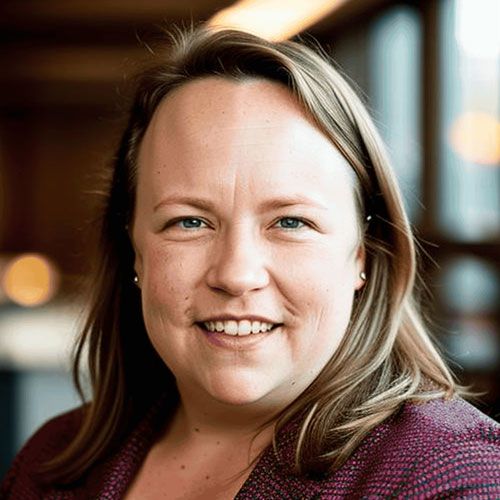
Lovewell's Director of Continuing Education Initiatives, an AAMFT Approved Supervisor, and a Washington State approved supervisor. She is teaching faculty in a COAMFTE-accredited Couple and Family Therapy program in the Seattle area, a trained Person of the Therapist (POTT) model presenter at the state, national, and international levels, and a clinician and supervisor at Northwest Relationships, a social-justice-oriented group practice in Tacoma, WA.
Both facilitators are licensed marriage and family therapists, AAMFT Approved Supervisors, Washington State approved supervisors, and POTT trained, so you are learning systemic supervision from clinicians who live in it and lead in it. Their AAMFT Approved Supervisor status is a personal credential; it does not make this a program of, or approved by, AAMFT, as noted above.
Lovewell Initiatives builds leadership and clinical training rooted in systemic theory, critical reflexivity, and equity, for mental health professionals and the institutions they serve.
Frequently Asked Questions
Does completing this training make me an approved supervisor?
Which Washington CE categories does this training cover?
Is this only useful in Washington?
Does this meet AAMFT Approved Supervisor requirements?
I was trained as a counselor or social worker and never learned family systems. Will I be lost?
What license types can attend?
Is there a virtual option, or do I have to attend in person?
What if the cost is a barrier?
What accessibility accommodations are available?
What are the refund, grievance, and certificate policies?
September 11 and 12, 2026 · Federal Way, WA
Supervision is how good clinical work gets passed forward
It deserves to be taught as the relational practice it is. If you are ready to supervise with more depth, and to earn the Washington approved-supervisor credential while you do it, we would love to have you in the room.
save my seatContinuing education compliance
Lovewell Initiatives is an NBCC Approved Continuing Education Provider™ (ACEP No. 7776). Lovewell Initiatives, LLC has been approved by NBCC as an Approved Continuing Education Provider, ACEP No. 7776. Programs that do not qualify for NBCC credit are clearly identified. Lovewell Initiatives, LLC is solely responsible for all aspects of the programs.
This program complies with the Americans with Disabilities Act. Lovewell Initiatives is committed to creating accessible and inclusive learning environments. All venues are wheelchair accessible, and reasonable accommodations are available upon request. Please contact [email protected] at least 10 days before the event to discuss accessibility needs.
Lovewell Initiatives, LLC · PO Box 6841, Tacoma, WA 98417 · (253) 470-8246 · [email protected] · www.livelovewell.co
Refund and cancellation policy, participant grievance policy, and non-discrimination statement: CE Information and Policies
LIVE LOVE WELL.